| | Why Esporão? Thoughts from Year One | | Growing up in rural Idaho, to be "of Portuguese descent" was a bit exotic. My Portuguese grandmother's heritage was a huge part of her identity, her Portuguese pride in abundance to counter her German, Dutch and Irish neighbors. (Fun fact: a small but mighty group from Pico, Azores, decided to homestead in north central Idaho in the early 1900s upon finding land that, in the spring, resembled Pico's lush, green-over-lava-rock.)
More than a century later, this Portuguese descendant is entrusted with connecting all of us to the Portugal of today, and the responsibility evokes a field blend of emotion; it's at once daunting, fascinating, humbling, and pride-filling. What an honor it is to have Esporão at the center of that story—mine, my family's, and all of ours at Cultivamos.
Portugal's borders were established in 1249. Only 18 years later, in 1267, so were Esporão's. We ponder 750+ years of history every day as we learn more about Portugal and Esporão. I relish knowing that the estate's long history and status as one of the country's most beloved companies mean it's forever tied to Portugal's identity. This iconic status is hard to translate in the US, where everything is younger, from borders to businesses. Translating this significance is part of our work at Cultivamos, and we love it.
Why Esporão? For one, the company is iconic, but never content to gather dust in a museum, opting instead to live and breathe. Also, the team guiding the estate forward are visionaries: data gatherers, investigators, stewards of the past who are responding to the present and preparing for the future. A few examples:
- Esporão is planting vineyards along innovative hydrological orientations to combat increasing summer heat; those vines will be interspersed with olive groves (of heirloom cultivars) which will naturally cool the estate even more.
- Those olive groves' byproducts, pits and pomace, will continue to fuel electricity to the winery, where the team learns how to use less and less water every year during production.
- The Michelin- and Green Michelin-starred restaurant team converts local produce and protein into narrative arcs; a meal there makes for a world-class punctuation mark to any winery and olive mill visit.
I was unaware of initiatives like these when I first connected with Esporão. Shortly after my first visit, I shared my enthusiasm with my grandmother, commenting on the amazing things and fascinating people I had encountered. Thoroughly unsurprised, she responded, "Well, of course they’re great. They're Portuguese!"
Now, a few years later, Cultivamos is a vessel for learning and teaching American wine professionals and culinary leaders about Portugal and its cuisine, art, history, language, culture, beauty. (PS. Have you been to the Cultivamos Library yet? Read the feature below!)
Today, our 1st Birthday, I am more certain than ever that "becoming experts" on Portugal—together, with you—is one of the most important and impactful missions we can take on. And maybe by next year, I will be ready to answer "Why Esporão?" more succinctly. Or maybe there will be a great story for why I can't, still. All the more reason to keep in touch with us in Year Two. |  | Ben Carson-Brown, President & CEO, Cultivamos | | | | |
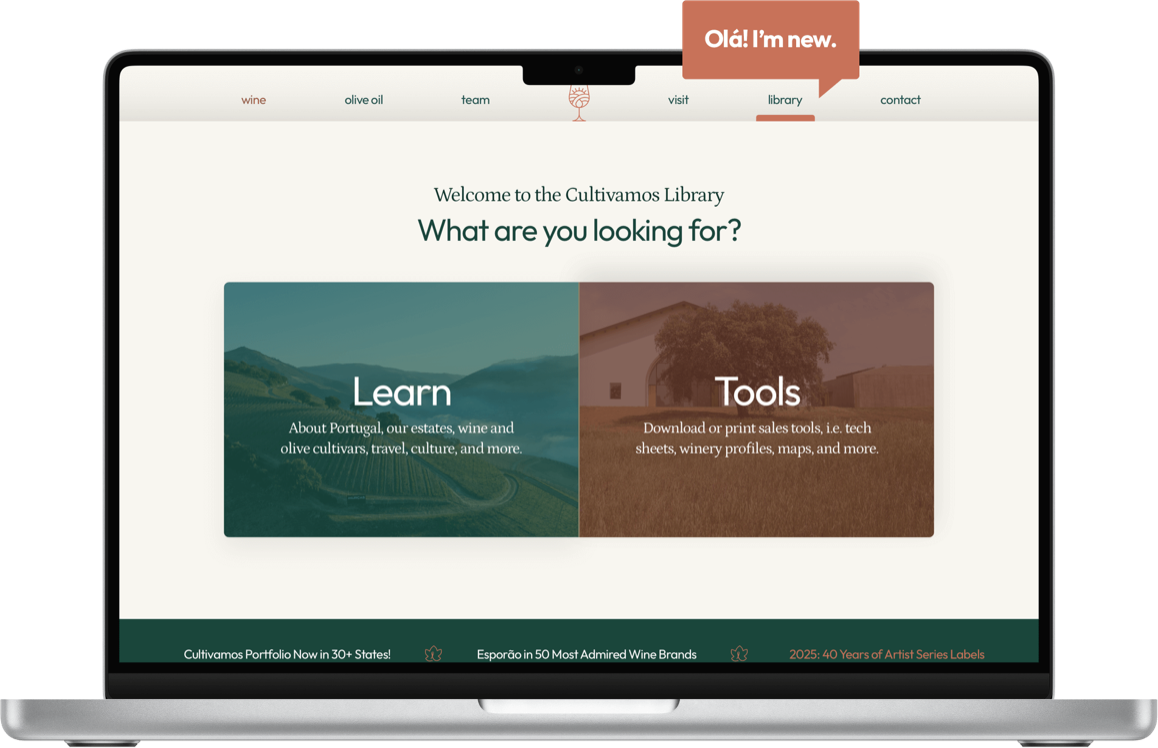
Cultivamos launched a hub for resources, tools, tips and inspiration: our library!
We continue to be amazed by how much there is to learn about Portugal—a small country that holds infinite new opportunities for discovery. Join us in the library, where you'll find tools (tech sheets, shelf talkers, etc.) and resources like immersive videos from the vineyards. Be sure to check in often, as we're adding new features every month! | | | | | By this time in October, the grape harvest has started to wind down in Portugal. Our colleague Rui was on hand at all three properties to document the triumphs and challenges of the 2025 harvest season, a moment for resilient winemaking teams to shine. Stay tuned for dispatches from the olive harvest in the next newsletter. - Erin
ESPORÃO - REGUENGOS DE MONSARAZ, ALENTEJO Harvest: August 5th – October 2nd
We had a rainy winter and spring! The dam at Esporão had not been this full since 2014. Spring and early summer saw normal weather until late July, when temps rose almost every day up to 40 °C (about 100 F). While this is not uncommon in Alentejo, this summer heat wave lasted weeks. Old vineyards with deep roots thrive as they reach for water deeper in the soil. In turn, a larger canopy helped protect fruit from sunburn.
Harvest started August 5th. Short-cycle varieties did better, such as Aragones, Viosinho, and Gouveio; long-cycle varietiess, like Touriga Nacional and Touriga Franca, felt the heat stress of longer summer and needed more expertise. Summer harvest shifts are from 6 am-1pm, so fruit is picked cold, in the early morning. Harvest ends on October 2nd with native Alentejo classics built for this climate: Moreto, Perrum, Diagalves. | 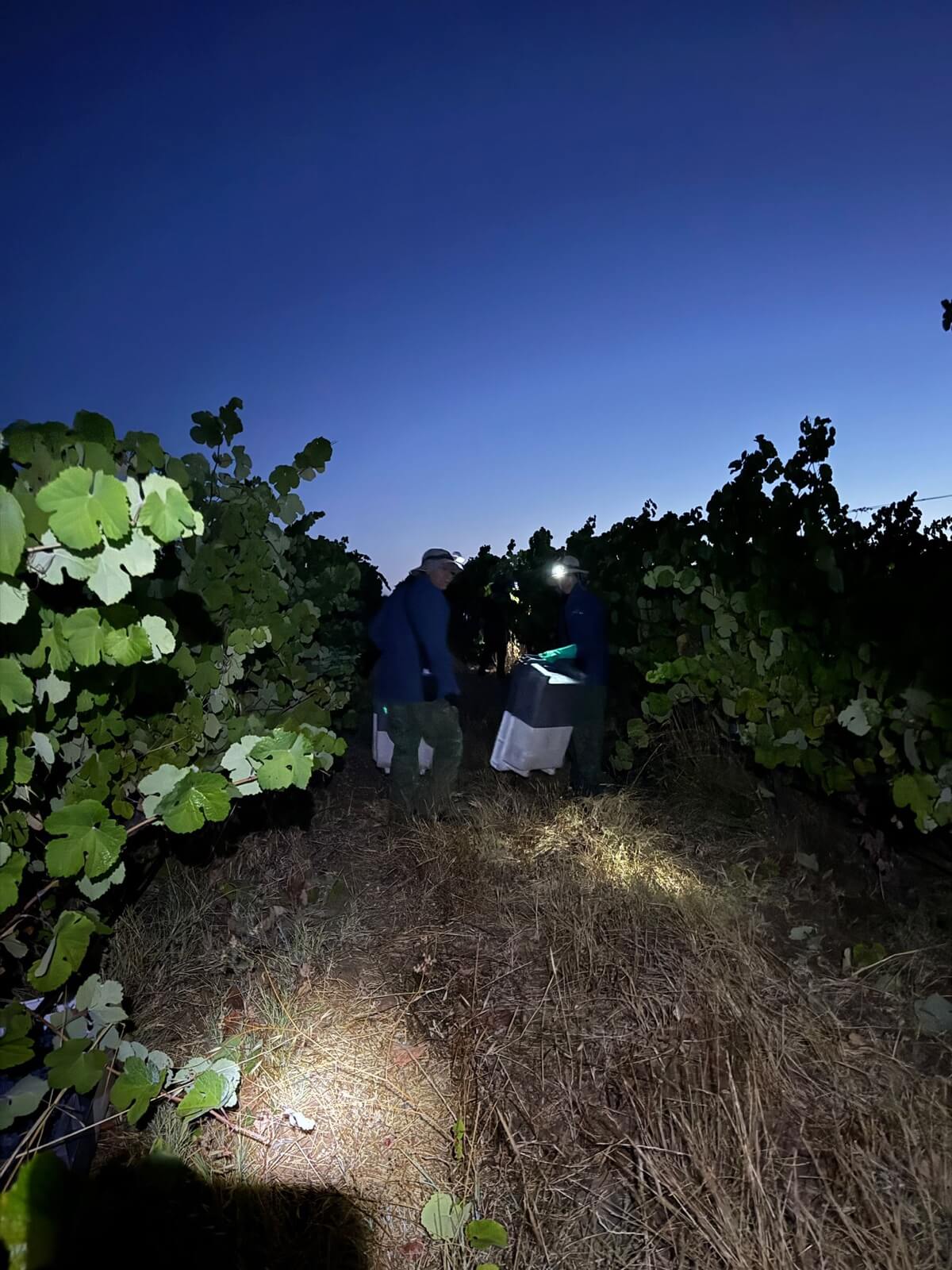 | MURÇAS - COVELINHAS, DOURO Harvest: August 19th – September 25th
2025 was a challenging year, marked by a staggering 40% decline in production at Murças, primarily due to excessive rainfall during the growing season. Summer was hot and dry, as it typically is. Harvest started on August 19th with early ripening varietals: Bastardo, Tinta Roriz, Tinta Barroca, and ended September 25th with Touriga Nacional, Touriga Franca, Sousāo. At Murças, the oldest vineyard parcels are harvested later: Margem on September 17th and Vinha Vertical on the 19th. This was an atypical year in the Douro, producing smaller berries and thicker skins, making for wines exhibiting good concentration. | 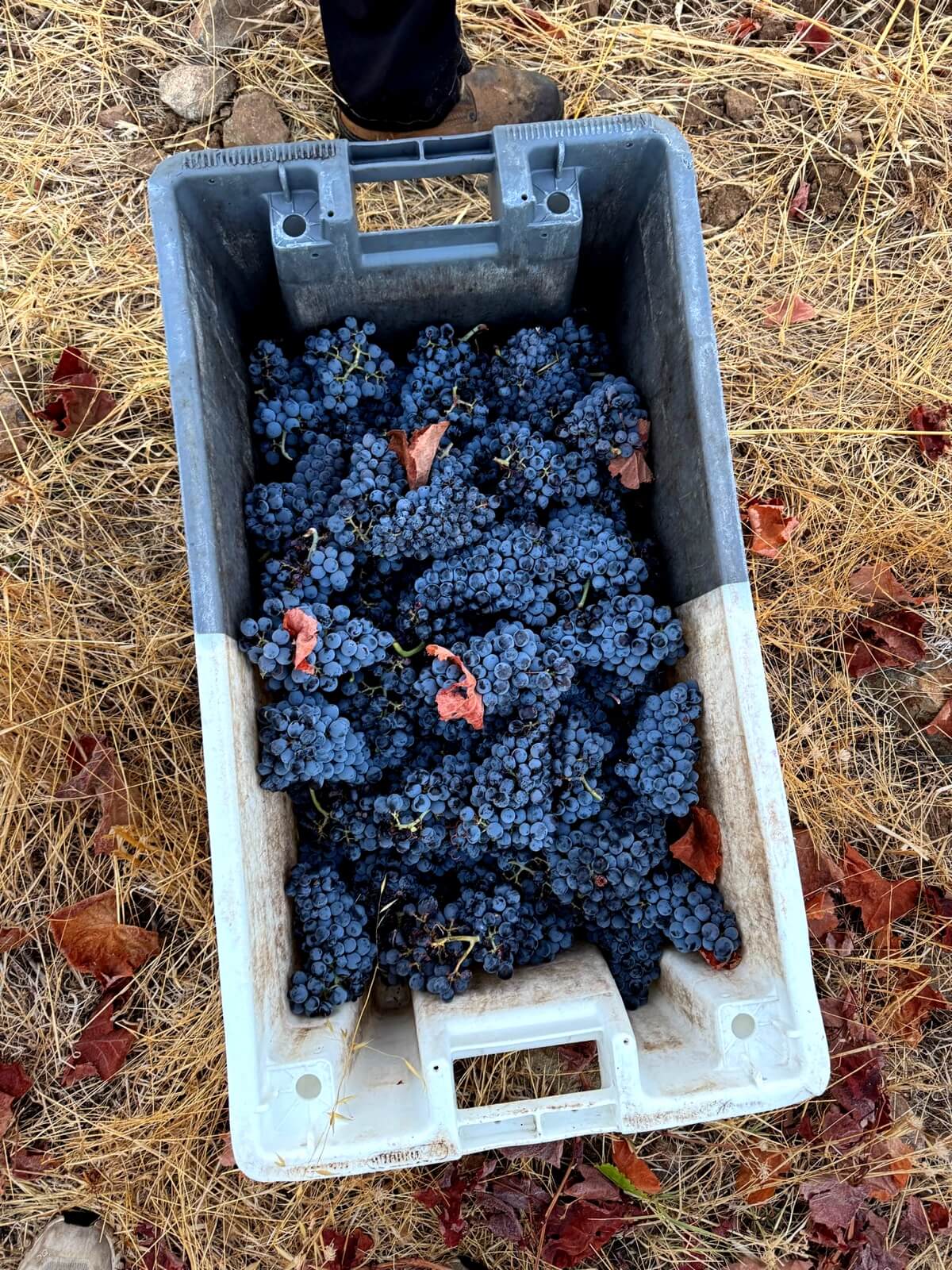 | AMEAL - PONTE DE LIMA, VINHO VERDE Harvest: August 25th – September 30th
This region of Portugal sees more rain than any other area except Pico Island's peak (2300 meters/6000+ feet high). A wet winter and spring spoiled the ongoing organic efforts at Ameal, which had to be postponed because the high temperatures of summer led to high humidity. The tropical-like climate is prone to fungus in the vineyard, threatening production. Summer was dry and warmer, as it has been over the past 10 years in the Vinho Verde DOC. A week of rain at harvesttime forced winemaker Mafalda Magalhaēs and her team to work at a faster pace on the farm's 14 hectares of vineyards. Red varieties, sourced locally for Bico Amarelo Red (code name BAT), were harvested from September 26th-30th. All in all, a warmer vintage in a cool area! | Rui Abecassis, Director of Business Development | | | | | Thankfully, our past selves leave breadcrumbs along the road to becoming experts to remind us who we are. Mine came recently in a stack of old wine notebooks. Turning the pages, reading tasting notes from the years I spent in retail—my introduction to the wine business circa 2007, and to adulthood in general—reminded me of a profoundly important time in my life, and two important reminders tucked among the inkspots. | 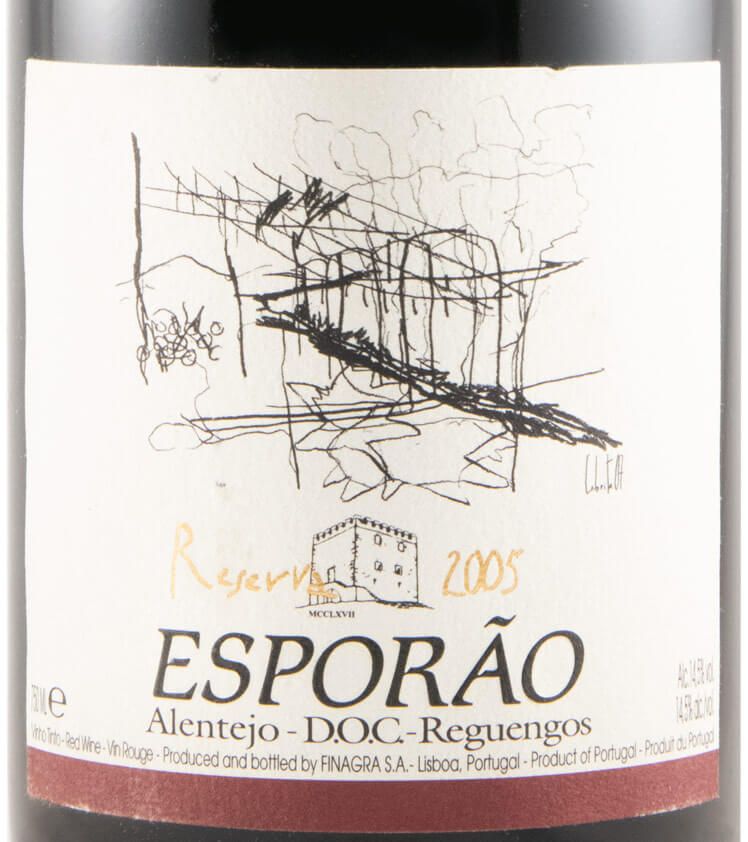 | 1. Embrace growth, but leave room to delight in the small consistencies that make you who you are. I had to laugh at my handwritten notes: the distinctive letter G, scrawled in 'Champagne,' written in a way only I can read, the same in 2007 as it is in 2025. A preference for black rollerball pens. Notes from long days, too many wines tasted, become loopier, even terse ... but wake up at any new discovery. Enthusiasm for acidity, 'wet rocks,' and impressionistic shape and flower descriptors remain constants in my tasting notes to this day.
2. There are thousands of wines in my notes, but it's the people who matter. I can see and hear individuals as I page through the notebooks: the owners of scrappy companies long since sold; the boss who became a best friend (and Cultivamos' portfolio manager!); visiting winemakers with strong accents leaving even stronger impressions; sales reps who patiently taught me how to be a wine professional at 22; a former enemy with whom I now take my morning tea. (You really never know!)
My wine shop was one of the first retailers in Chicago to carry the wines from Esporão, so finding tasting notes to share today peppered among these pages was inevitable. Why Esporão?, asks Ben. Here's my why: evolution and growth, but consistency. A clear point of view, but never a closed mind. It has been a true pleasure to keep company with the wines, and people, who have impressed me since the start of my career. What breadcrumbs will we leave for our future selves?
On February 16th, 2009, I gave the 2005 Esporão Reserva Red two stars in my favorite red notebook: my highest praise. My tasting note could have been written yesterday, or tomorrow, and I still know exactly what I meant when I wrote, "Ripe, red berries. Oak and sweet cream. Candied orange peel. Light on its feet." |  | Erin Drain, Trade Marketing & Communications | | | | | October 6 / 11 AM ET (every 1st Monday) | | We’re building a community of wine professionals and culinary experts. Reply to this email directly to get the link to our upcoming Office Hours. | | | | | Elizabeth Smith, Portfolio Manager - MS Walker, NYC | | Elizabeth's autobiography: I joined the wonderful world of wine 10 years ago, and have since worked in retail, distribution, importing, and wine education. I completed the WSET Diploma in 2021, and the most important thing I learned is that the more you know, the more you know you don’t know! Currently, I am a brand manager at MS Walker, thrilled to work with an incredible portfolio of South American and European wines, with a heavy focus on Portugal. | 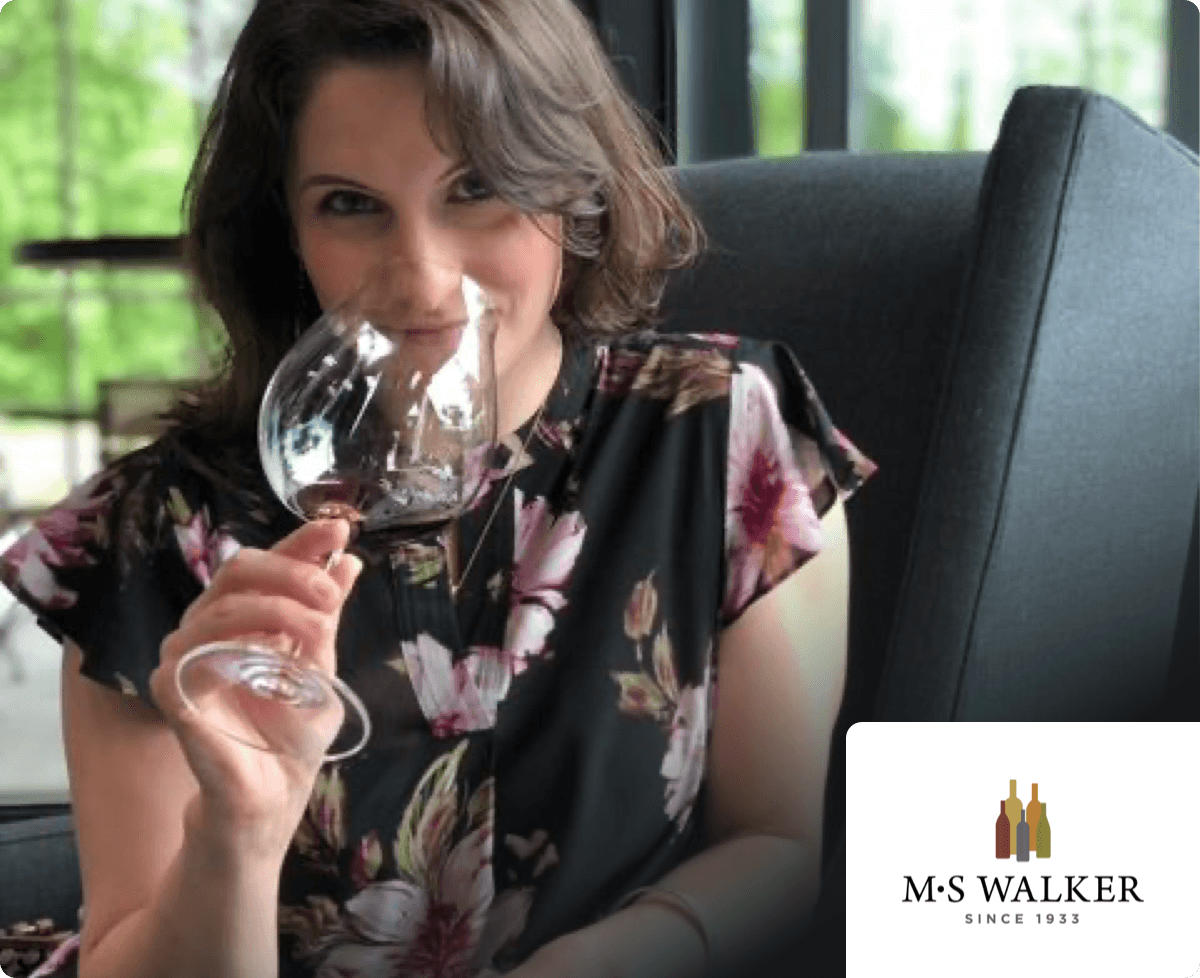 | Cultivamos: Travel to Portugal has been booming for the last decade, and yet professionals in the US wine industry are still very eager and open to learning more about Portuguese wine. What do you think people, especially in the trade, still want to learn about—even if they’ve been to Portugal?
Elizabeth: I think people, especially those in the trade, are interested in learning about things that challenge our accepted notions of what “Portuguese wine” is. (I put this phrase in quotes because it is hardly one entity!) Everybody knows a crisp Vinho Verde or a full-bodied Douro red; they probably know something about the regions of say, Alentejo or Bairrada as well. But the most fun things to learn (and, in turn, to share) are the things that surprise you! Wineries that are doing things differently from their neighbors or traditions; estates in microclimates that defy expectations of their broader region; winemakers elevating unexpected grapes…these are the things that capture even seasoned professionals’ attention.
And what’s amazing about Portugal is that with 300+ grape varieties and an ancient viticulture which has also evolved lightyears in the last 4 decades, there is absolutely no shortage of new discoveries. I personally was amazed to learn about Esporão’s experimental vineyard – doing this kind of rigorous research in a place that’s been growing wine grapes for a millennium is a truly humble dedication to learning and improvement!
Cultivamos: The frenetic pace of the wine industry is sometimes at odds with the goals of relaxing and enjoying a glass or bottle with loved ones. When you’re home and relaxing, what are you cooking, eating, drinking, listening to, watching, and why?
Elizabeth: I eat a lot of home-cooked food – I’m lucky because my husband used to be a butcher, and he has a passion for cooking and feeding people. My favorite way to eat is to begin with a bottle of wine that I’m excited about, and plan a meal that I think will elevate it. It’s probably more normal to go the other way around, but I really enjoy reverse-engineering a dish that hopefully makes the wine shine, cooking it together, and that special moment where you uncork the bottle and find out how the pairing worked!
Wine doesn’t exist in a vacuum – the context of food and company is such an important part of its meaning – and the wines I taste like this are often the ones I remember most. As far as watching, I love to watch nature shows – in a world that sometimes feels like it’s just full of bad news, it’s wonderful to be reminded that so much of the world has nothing to do with us at all – and that it continues to turn, as birds make their annual migrations and small animals build their nests – regardless of what is bothering us that particular day.
Thank you, Elizabeth! | | | | | | | | | 72 Hudson St, Suite 1B, Hoboken, NJ 07030 | | | | | | |